
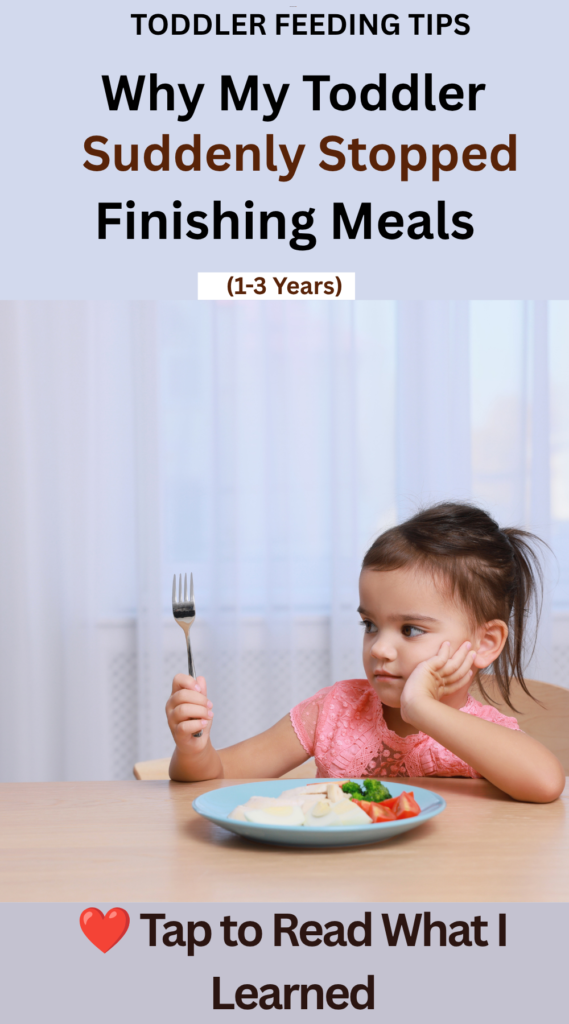
There was a time when my toddler would happily finish most of her meals.
Then suddenly, things changed.
She started leaving food on her plate, pushing it away halfway through meals, or saying she was done much earlier than before.
At first, I worried that something was wrong. But over time, I learned that changes in appetite are very common during the toddler years.
Just like I shared in my posts about What I Do When My Toddler Asks for Food But Then Won’t Eat It, What I Do When My Toddler Wants a Snack Right After a Meal, and What I Do When My Toddler Says “Yuck” Before Even Tasting Food, understanding toddler behavior often helped me worry less about individual meals.
Here are the things I learned.
1. Growth Slows Down After Babyhood
Babies grow incredibly fast.
Toddlers still grow, but usually at a slower pace.
Because of this, they often don’t need as much food as they did during certain stages of infancy.
What looked like a sudden decrease in appetite was sometimes simply a normal part of growth.
2. Appetite Naturally Changes From Day to Day
One thing I noticed is that toddlers rarely eat the same amount every day.
Some days my toddler seemed constantly hungry.
Other days she barely touched her meals.
Looking at her eating patterns over a week instead of a single day helped me feel much less stressed.
3. Snacks Can Affect Mealtime Hunger
Toddlers have small stomachs.
If my toddler had a filling snack close to lunch or dinner, she often wasn’t interested in finishing her next meal.
Paying attention to snack timing made a noticeable difference.
4. Distractions Matter More Than We Think
Sometimes the issue wasn’t the food.
It was everything else happening around it.
Interesting toys, family activity, visitors, or exciting plans often competed with mealtime.
A calm eating environment helped my toddler stay focused longer.
5. Some Days They Need Less Food
Adults don’t eat exactly the same amount every day.
Toddlers don’t either.
Physical activity, sleep quality, weather, teething, and mood can all influence appetite.
I’ve learned not to panic when one meal is smaller than usual.
6. Pressure Often Makes Things Worse
When I worried about unfinished meals, I sometimes encouraged “just one more bite.”
Unfortunately, that usually didn’t help.
The more relaxed I became, the more comfortable my toddler seemed around food.
7. I Focus on Overall Nutrition
Instead of looking at a single unfinished plate, I try to think about:
- What she ate today
- What she ate yesterday
- Her energy level
- Her growth
- Her overall health
This bigger picture is often much more helpful.
8. Familiar Foods Can Come and Go
Toddlers sometimes stop finishing foods they previously loved.
Then a few weeks later they happily eat them again.
I’ve learned that food preferences can be surprisingly temporary during the toddler years.
What Helped Us Most
The biggest lesson I learned was that an unfinished meal doesn’t automatically mean something is wrong.
Sometimes toddlers are simply:
- Growing differently
- Less hungry
- Distracted
- Tired
- Going through a normal developmental phase
Looking at overall eating habits instead of individual meals helped me worry much less.
Recommended Products
- Divided Toddler Plate
- Spill-Proof Snack Cup
- Toddler Water Bottle
- Silicone Spoon & Fork Set
- Insulated Food Jar
Affiliate Disclosure
Tiny Tummy Meals may recommend products and resources that could be helpful for parents and toddlers. If affiliate links are included in the future, they will be clearly identified. I only recommend products that I genuinely believe may be useful for families.
Medical Disclaimer
The information shared on Tiny Tummy Meals is for educational and informational purposes only and should not be considered medical advice. Every child is different. Please consult your pediatrician or a qualified healthcare professional regarding any concerns about your child’s health, nutrition, growth, or feeding habits.