
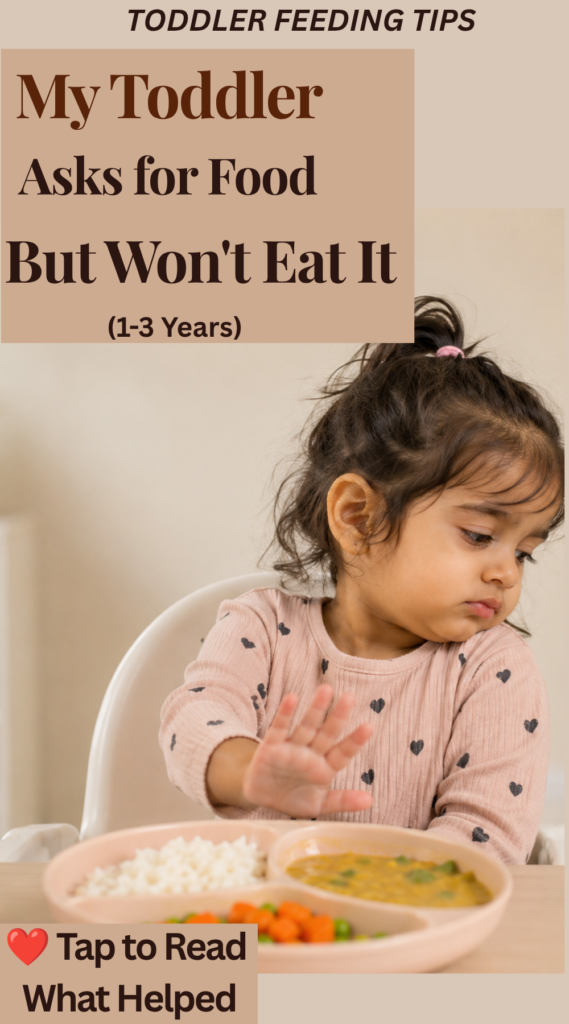
Have you ever heard your toddler say:
“Mama, I’m hungry!”
So you prepare a meal or snack, place it in front of them, and then suddenly…
They refuse to eat it.
My toddler has done this many times, and at first it was incredibly confusing. If she was hungry, why wasn’t she eating? Over time, I realized there was usually more going on than simple hunger.
Just like I shared in my posts about What I Do When My Toddler Says “Yuck” Before Even Tasting Food, What I Do When My Toddler Wants a Snack Right After a Meal, and What I Do When My Toddler Eats Only 2–3 Bites and Says “All Done”, understanding the reason behind the behavior often helped more than trying to convince my toddler to eat.
Here are the things that helped us.
1. I Give My Toddler a Few Minutes
Sometimes toddlers ask for food while they are busy playing.
By the time the food arrives, they are focused on something else.
Instead of pressuring my toddler to eat immediately, I give her a few minutes to transition from playtime to mealtime.
2. I Offer Smaller Portions First
Large portions can sometimes feel overwhelming.
When my toddler asks for food, I start with a small serving.
If she’s still hungry, I can always offer more.
A smaller plate often feels less intimidating and reduces food refusal.
3. I Check Whether She’s Tired
I noticed this behavior happens more often when my toddler is tired.
Sometimes what looked like hunger was actually:
- Fatigue
- Overstimulation
- Need for a break
When she’s tired, even her favorite foods can be rejected.
4. I Avoid Becoming a Short-Order Cook
It can be tempting to keep offering different foods until something works.
I’ve learned that constantly replacing meals can create a cycle where toddlers expect a new option every time they refuse food.
Instead, I calmly keep the original meal available.
5. I Watch for Distractions
If toys, screens, or exciting activities are nearby, food often loses the competition.
Creating a calm mealtime environment helps my toddler focus better on eating.
6. I Let Her Listen to Her Appetite
Some days toddlers ask for food because they think they’re hungry.
Then they realize after a few bites that they don’t actually want much.
I’ve learned to trust my toddler’s appetite rather than forcing extra bites.
7. I Stay Neutral
When my toddler refuses food after asking for it, I avoid saying:
- “But you asked for this!”
- “You said you were hungry!”
- “Just finish it.”
Staying calm helps prevent mealtimes from becoming stressful.
8. I Remember That Toddler Appetites Change Daily
Toddlers don’t eat the same amount every day.
Growth, activity levels, teething, sleep, and mood can all affect appetite.
Looking at the whole week instead of a single meal helps me worry less.
What Helped Us Most
The biggest change happened when I stopped assuming every request for food meant my toddler was ready to eat immediately.
Sometimes she needed:
- A break from play
- A smaller portion
- Less pressure
- More time
Understanding the reason behind the behavior made mealtimes much easier.
Recommended Products
- Divided Toddler Plate
- Spill-Proof Snack Cup
- Toddler Water Bottle
- Silicone Spoon & Fork Set
- Insulated Food Jar
Affiliate Disclosure
Tiny Tummy Meals may recommend products and resources that could be helpful for parents and toddlers. If affiliate links are included in the future, they will be clearly identified. I only recommend products that I genuinely believe may be useful for families.
Medical Disclaimer
The information shared on Tiny Tummy Meals is for educational and informational purposes only and should not be considered medical advice. Every child is different. Please consult your pediatrician or a qualified healthcare professional regarding any concerns about your child’s health, nutrition, growth, or feeding habits.