
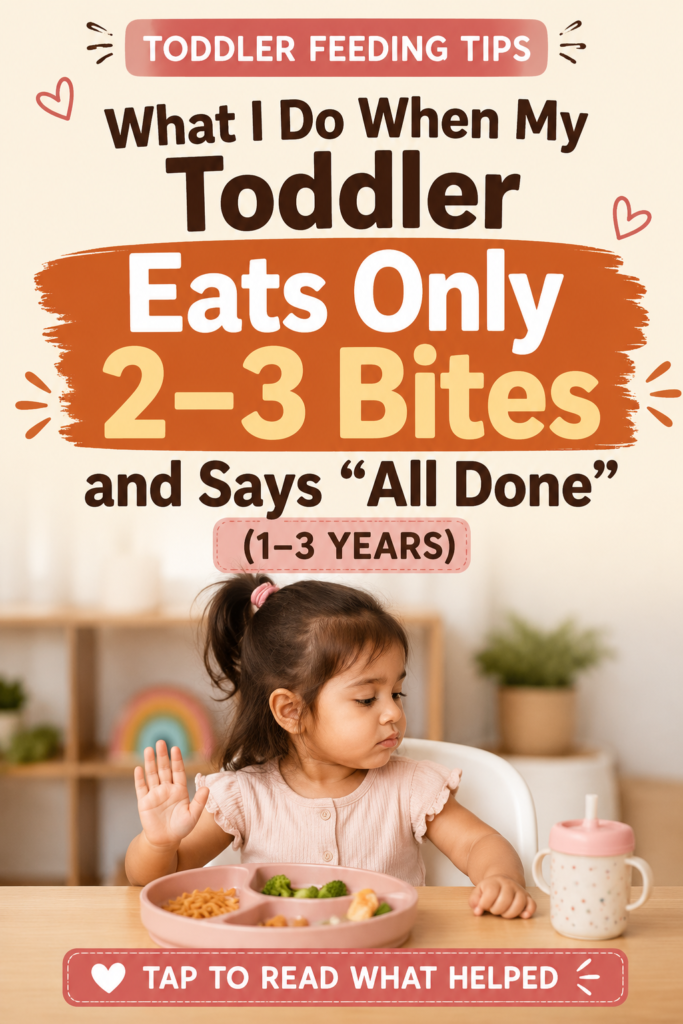
Some days my toddler sits down for a meal, takes only two or three bites, and then announces she’s finished. I used to worry that she wasn’t eating enough, but over time I learned that this is a common phase for many toddlers.
Just like I shared in my What Helped My Toddler Stay Full Longer, What Helped My Toddler Try New Foods, and What I Do When My Toddler Refuses Lunch posts, I’ve found that staying calm and making a few small changes works much better than pressuring my child to eat more.
These are the simple things that help us when my toddler eats only a few bites and says “all done.”
1. I Serve Smaller Portions
One thing that surprised me was how often large portions discouraged my toddler.
Instead of filling the entire plate, I started serving very small amounts. If she finished, I could always offer more.
Why it helps:
- Less overwhelming
- Reduces pressure
- Encourages independent eating
I like using a divided toddler plate because small portions look more manageable for little eaters.
2. I Include One Familiar Food
When introducing something new, I always try to serve at least one food I know my toddler enjoys.
For example:
- Rice
- Banana
- Curd
- Paneer
- Sweet potato
Seeing a familiar food often makes her more willing to stay at the table and try other foods too.
3. I Avoid Asking for “One More Bite”
I used to constantly encourage my toddler to take one more bite.
Eventually I noticed it often made meals more stressful.
Now I focus on creating a relaxed mealtime environment and let her decide how much to eat.
Why it helps:
More enjoyable family meals
Less mealtime pressure
Better relationship with food
4. I Keep Mealtimes Simple
When my toddler isn’t interested in eating, complicated meals rarely help.
Simple meals often work best, such as:
- Rice with ghee
- Vegetable idli
- Paneer rice
- Besan chilla
- Curd with fruit
An insulated food jar can also be useful for keeping simple homemade meals warm when you’re travelling or away from home.
5. I Look at the Whole Day, Not One Meal
This mindset helped me the most.
Some toddlers eat very little at one meal and then eat better later in the day.
Instead of focusing on one lunch or dinner, I look at:
- Total food intake throughout the day
- Energy levels
- Growth
- Activity
Many toddlers naturally balance their intake over several meals.
6. I Make Sure Snacks Are Timed Well
If snacks are too close to meals, my toddler often isn’t hungry when lunch or dinner arrives.
I try to leave enough time between:
- Breakfast and snack
- Lunch and snack
- Dinner and bedtime snack
This helps meals stay meaningful.
7. I Remember That Appetite Changes Are Normal
Toddlers go through:
- Growth spurts
- Teething
- Busy active days
- Tired days
- Mood changes
All of these can affect appetite.
When my toddler eats only a few bites, I remind myself that one meal doesn’t define her overall nutrition.
Recommended Products
Medical Disclaimer
This article is based on personal experience and is intended for informational purposes only. Every child is different. Please consult your pediatrician or healthcare professional regarding your child’s nutritional needs and feeding concerns.
Affiliate Disclosure
Some links on this website may be affiliate links. If you purchase through these links, I may earn a small commission at no extra cost to you. This helps support the website and allows me to continue creating helpful content for parents.