
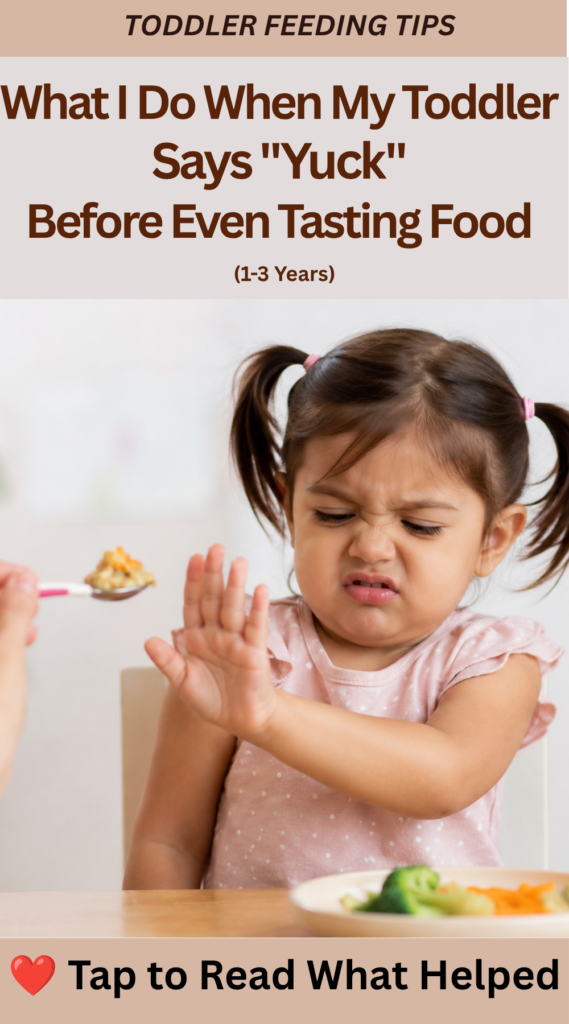
If you’re a toddler parent, you’ve probably heard it before:
“Yuck!”
The funny thing is that many toddlers say it before they even taste the food.
My toddler has gone through this phase too. Sometimes she would decide she didn’t like a food just by looking at it. At first, I worried she was becoming a picky eater, but over time I learned that this is actually a very common toddler behavior.
Just like I shared in my posts about What Helped My Toddler Try New Foods, What I Do When My Toddler Eats Only 2–3 Bites and Says “All Done”, and What Helped My Toddler Stay Full Longer, a few simple changes made mealtimes much less stressful.
Here is what helped us.
1. I Stay Calm and Avoid Arguing
When my toddler says “yuck,” my first instinct is to convince her that the food is good.
But I noticed that arguing usually made things worse.
Instead, I stay calm and simply say:
“That’s okay. You don’t have to eat it if you don’t want to.”
Removing pressure often helps toddlers feel more comfortable around new foods.
2. I Keep Serving the Food Anyway
One thing I learned is that toddlers often need to see a food many times before they are willing to try it.
Even if my toddler says “yuck,” I continue placing a small amount on her plate without making a big deal about it.
Sometimes she ignores it.
Sometimes she touches it.
Sometimes she eventually tastes it.
All of those are small wins.
3. I Let Curiosity Do the Work
Instead of asking my toddler to eat the food, I encourage exploration.
For example:
- What color is it?
- Is it soft or crunchy?
- Does it smell sweet?
This takes the focus away from eating and makes the experience more fun.
4. I Serve New Foods With Familiar Foods
This strategy has helped us many times.
If I’m serving something new, I also include foods my toddler already enjoys, such as:
- Rice
- Curd
- Paneer
- Banana
- Sweet potato
Seeing familiar foods makes the plate feel less overwhelming.
5. I Avoid Labeling Foods as “Healthy”
I used to say things like:
“Eat it, it’s healthy.”
But toddlers don’t usually care about nutrition.
Instead, I talk about the food in simple ways:
- “It’s orange.”
- “It’s crunchy.”
- “I like the smell.”
This keeps mealtimes more relaxed.
6. I Let My Toddler See Me Eat It
Toddlers learn by watching.
When my toddler sees me happily eating the same food, she’s often more interested in trying it herself.
Family meals can be surprisingly powerful.
7. I Focus on Progress, Not Perfection
One lick.
One touch.
One tiny bite.
These may seem small, but they are often the first steps toward accepting a new food.
I remind myself that learning to enjoy new foods takes time.
Foods My Toddler Initially Called “Yuck” But Later Accepted
- Paneer
- Sweet potato
- Avocado
- Oats
- Vegetable paratha
- Cucumber sticks
- Vegetable paratha
Many toddlers reject foods before eventually accepting them.
Recommended Products
- Divided Toddler Plate
- Toddler Spoon & Fork Set
- Spill-Proof Snack Cup
- Silicone Feeding Mat
- Insulated Food Jar
Medical Disclaimer
This article is based on personal experience and is intended for informational purposes only. Every child is different. Please consult your pediatrician or healthcare professional regarding feeding concerns or nutritional needs.
Affiliate Disclosure
This post may contain product recommendations based on personal experience. Please do your own research before purchasing any product for your child.