
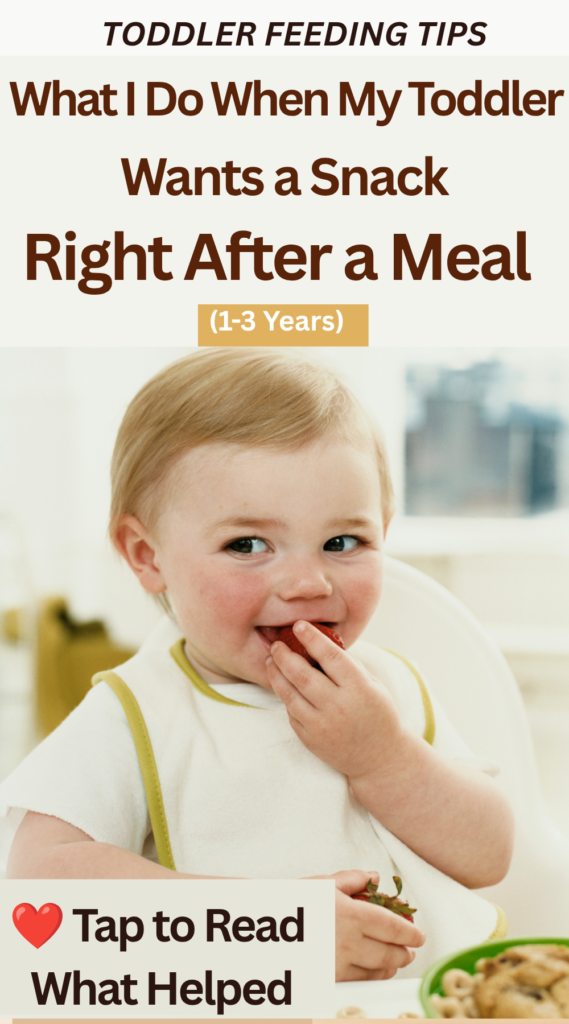
Have you ever served lunch or dinner, watched your toddler finish eating, and then heard:
“Snack?”
Just a few minutes later?
My toddler has gone through this phase too. At first, I was confused. If she was still hungry, why didn’t she eat more during the meal? Over time, I realized that toddlers may ask for snacks right after eating for many different reasons.
Just like I shared in my posts about What I Do When My Toddler Says “Yuck” Before Even Tasting Food, What I Do When My Toddler Eats Only 2–3 Bites and Says “All Done”, and What I Do When My Toddler Refuses Lunch, understanding the reason behind the behavior often helps more than focusing on the food itself.
Sometimes toddlers are genuinely hungry. Sometimes they are thirsty, bored, or simply hoping for a favorite snack.
Learning how to respond without turning every meal into a battle made a big difference in our home. Here are the simple things that helped us.
1. I Check Whether My Toddler Is Actually Hungry
The first thing I do is ask myself:
Did she eat very little during the meal?
If my toddler only had a few bites, she may genuinely still be hungry.
But if she had a reasonable meal and immediately asks for snacks, there may be another reason behind it.
2. I Avoid Offering Treats Right Away
One mistake I used to make was offering favorite foods immediately after a meal.
My toddler quickly learned that if she skipped part of her lunch, she might get something more exciting afterward.
Now I try to keep mealtime and snack time separate.
3. I Follow a Simple Meal and Snack Routine
Toddlers often feel more secure when they know food is available regularly.
Our routine usually looks something like this:
- Breakfast
- Morning snack
- Lunch
- Evening snack
- Dinner
- Bedtime snack (if needed)
Having a predictable routine has reduced many snack requests.
4. I Offer Water First
Sometimes toddlers ask for snacks when they are actually thirsty.
Before offering another snack, I encourage my toddler to drink some water.
This simple step has helped more times than I expected.
5. I Look at What Was Served During the Meal
If the meal was very small or lacked foods that help toddlers stay satisfied, they may become hungry again quickly.
For example, meals that include:
- Paneer
- Curd
- Dal
- Nut butter
- Eggs (if your family eats eggs)
often keep toddlers satisfied for longer.
6. I Try Not to Panic About One Meal
There were days when I worried my toddler wasn’t eating enough.
But I learned to look at the entire day rather than one meal.
Some toddlers naturally eat more at certain meals and less at others.
What matters most is the overall pattern.
7. I Use Snack Requests as a Chance to Teach Hunger Cues
Sometimes I ask simple questions such as:
- Is your tummy still hungry?
- Do you want food or just something to do?
- Would you like to wait until snack time?
These conversations have slowly helped my toddler understand the difference between hunger and wanting food for fun.
8. I Keep Healthy Snack Options Available
If my toddler is genuinely hungry, I prefer offering simple foods such as:
- Banana
- Curd
- Fruit
- Homemade chilla
- Boiled sweet potato
- Makhana
- Cheese cubes
These foods help fill little tummies without replacing the next meal.
What Helped Us Most
The biggest change happened when I stopped assuming every snack request meant hunger.
Sometimes my toddler was:
- Bored
- Curious
- Thirsty
- Looking for a favorite food
Understanding the reason behind the request made mealtimes much easier.
Recommended Products
- Divided Toddler Plate
- Spill-Proof Snack Cup
- Silicone Spoon & Fork Set
- Insulated Food Jar
- Toddler Water Bottle
Medical Disclaimer
This article is based on personal experience and is intended for informational purposes only. Every child is different. Please consult your pediatrician or healthcare professional regarding your child’s nutritional needs and feeding concerns.
Affiliate Disclosure
This post may contain product recommendations based on personal experience. Please do your own research before purchasing any product for your child.