
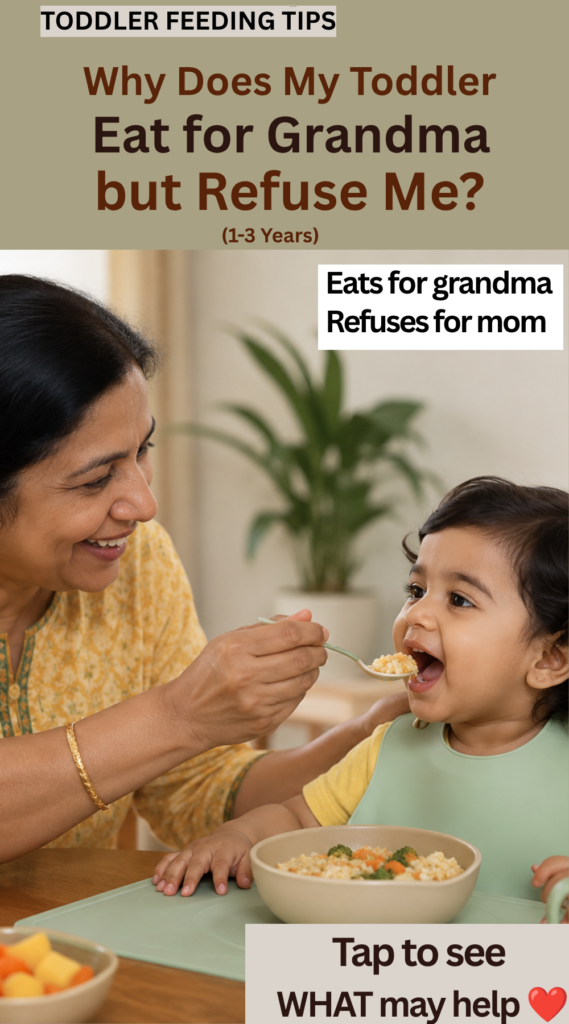
Does your toddler happily eat for grandma, dad, or another caregiver but suddenly refuse food when you’re the one feeding them?
If so, you’re not alone. Many parents notice that their toddler seems more cooperative with other family members during meals and wonder if they’re doing something wrong.
The good news is that this behavior is very common and is often linked to independence, routine, and familiarity.
If you’re currently struggling with picky eating, you may also find these helpful:
Why Does This Happen?
Toddlers often test boundaries with the people they feel safest with.
Because parents usually handle most meals and snacks, toddlers may feel comfortable refusing food, negotiating, or simply exploring their independence.
With grandma or another caregiver, the situation feels different and sometimes more exciting.
The food may be exactly the same, but the experience feels new.
Different Feeding Styles Can Make a Difference
Grandparents and other caregivers often approach meals differently.
They may:
- offer less pressure
- talk less about eating
- stay relaxed during meals
- allow the child to eat at their own pace
Toddlers often respond positively to a calm and low-pressure mealtime environment.
Encourage Independence
Sometimes toddlers eat better for others because they feel more in control.
Many children enjoy feeding themselves and making small choices during meals.
A Toddler Spoon and Fork Set can help encourage self-feeding and give toddlers a sense of independence at the table.
If your child is showing signs of wanting more control during meals, you may also enjoy:
👉 Why Does My Toddler Want to Feed Themselves All of a Sudden?
What Helped Me
One thing that helped me was focusing less on how much my toddler ate and more on creating a calm mealtime routine.
Instead of encouraging extra bites, I simply offered balanced meals and let my toddler decide how much to eat.
Over time, mealtimes became less stressful for both of us.
Simple Tips to Try
Keep Meals Predictable
Serve meals and snacks around the same time each day.
Toddlers often feel more comfortable when they know what to expect.
Avoid Pressure
Try not to bargain, negotiate, or insist on “just one more bite.”
Pressure can sometimes increase resistance.
Stay Consistent
Even if your toddler eats better for grandma today, continue offering balanced meals and snacks without comparison.
Most children move through this phase naturally.
The Good News
A toddler who refuses food for you today may happily eat for you a few months from now.
This phase is usually temporary.
Consistency, patience, and low-pressure meals often help more than trying to find the perfect trick.
Recommended Products
Explore More
👉 Why Does My Toddler Suddenly Hate the High Chair?
👉 What Does a Balanced Toddler Snack Plate Look Like?
👉 Why Does My Toddler Refuse to Eat in New Places?
👉 Explore more: Tinytummymeals.com
Affiliate Disclosure
This post may contain affiliate links. As an Amazon Associate, we may earn from qualifying purchases at no additional cost to you.
Medical Disclaimer
This article is for informational purposes only and should not replace professional medical advice. Always consult your pediatrician regarding concerns about your child’s nutrition, feeding habits, or growth.