
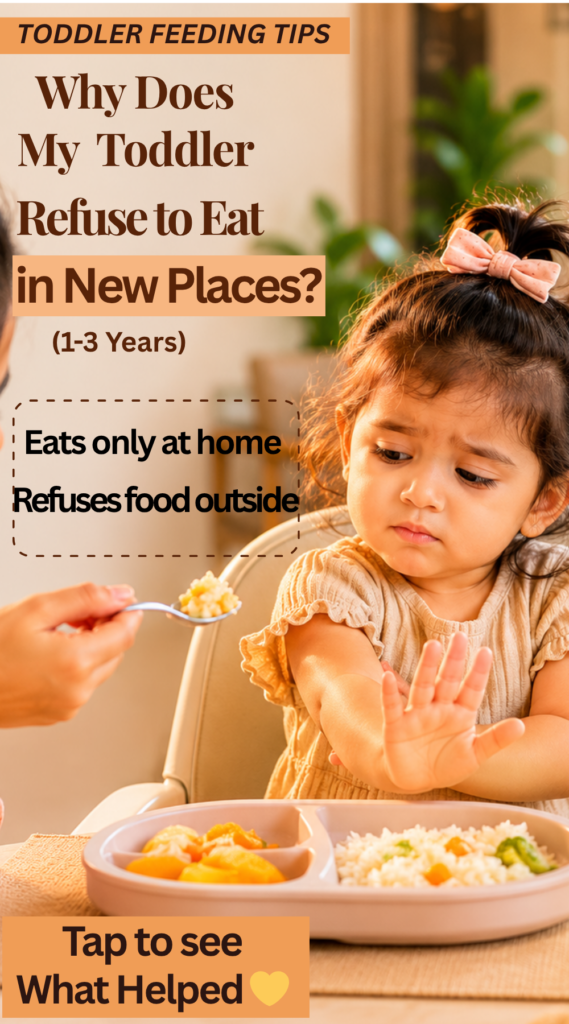
Some toddlers eat comfortably at home but suddenly refuse meals while traveling, visiting relatives, eating at restaurants, or staying in unfamiliar places. This can feel confusing for parents, especially when your child normally eats well at home 💛
For many toddlers, eating is strongly connected to comfort, routine, surroundings, and familiarity.
👉 Related: 7-Day Weight Gain Meal Plan for Toddlers.
👉 Related: Why Does My Toddler Refuse Every Meal Some Days?
Why Toddlers May Refuse Food in New Places
Toddlers often notice:
- different smells
- new people
- unfamiliar sounds
- changed routines
- different seating arrangements
Even small changes can make some toddlers feel less comfortable during meals.
Many children simply need time to adjust before eating normally outside home.
What Helped My Toddler Feel More Comfortable
✔ Carried familiar foods from home
Small familiar snacks sometimes helped reduce stress in new environments.
Simple options that worked better:
- banana slices
- homemade mini idli
- plain rice
- soft paratha pieces
- paneer cubes
✔ Used the same toddler plate or spoon
Using familiar feeding items sometimes made meals feel more comfortable and predictable.
A 👉 lightweight divided toddler plate helped my toddler feel more familiar during meals outside home.
✔ Avoided pressure to eat immediately
When I stopped asking repeatedly and gave a little adjustment time, my toddler sometimes became calmer around food.
Toddlers may need a few minutes to observe their surroundings first.
✔ Offered smaller portions first
Large meals sometimes felt overwhelming in unfamiliar places.
Smaller portions looked easier and less stressful.
A 👉 leakproof toddler snack bowl was also helpful for carrying small familiar foods during outings 💛
Simple Foods That May Work Better Outside Home
✔ Soft poha
✔ Mini paneer cubes
✔ Banana pieces
✔ Soft rice with ghee
✔ Mini uttapam pieces
✔ Homemade potato paratha strips
💛 Final Thoughts
Some toddlers naturally feel less comfortable eating in unfamiliar environments. This phase is common and often improves slowly with routine, patience, and familiar foods.
Gentle exposure, low pressure, and comforting mealtime routines may help toddlers feel safer and more relaxed during meals outside home 💛
Affiliate Disclosure
This post may contain affiliate links. As an Amazon Associate, we may earn from qualifying purchases at no extra cost to you.
Medical Disclaimer
This content is for informational purposes only and should not replace professional medical advice. Please consult your pediatrician for personalized guidance regarding your toddler’s nutrition, feeding concerns, or growth.