
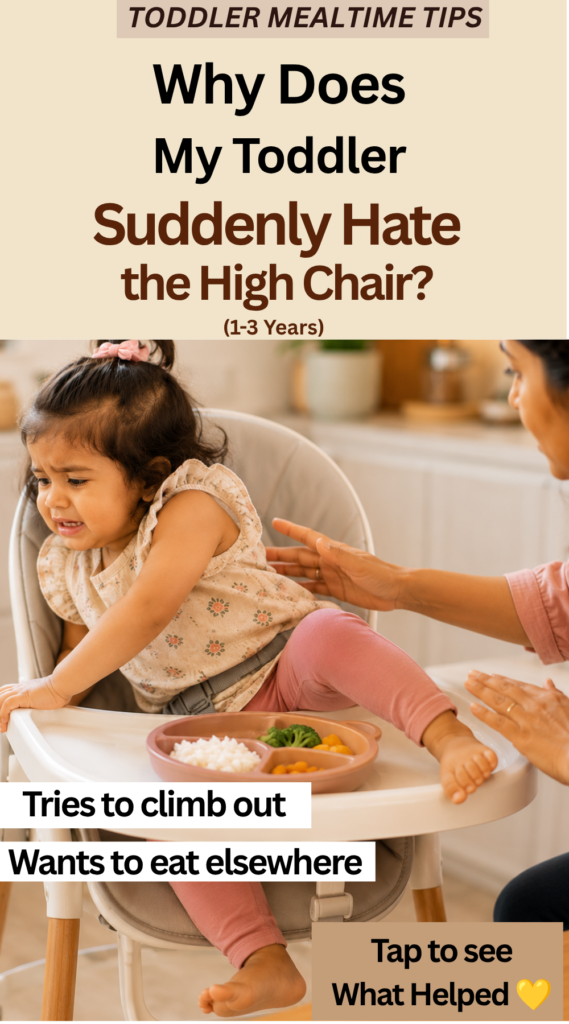
A few months ago, my toddler would happily sit in the high chair for meals. Then suddenly, everything changed. She wanted to climb out, refused to stay seated, and sometimes seemed more interested in standing than eating.
If you’re experiencing the same thing, you’re definitely not alone. Many toddlers go through a stage where they suddenly resist the high chair, even when they previously had no problem using it.
👉 Related: Why Does My Toddler Want to Eat by Themselves All of a Sudden?
👉 Related: Why Does My Toddler Refuse to Eat in New Places?
Why Toddlers Suddenly Resist the High Chair
Around 1–3 years of age, toddlers become more independent.
They want to:
- make their own choices
- move around more
- copy older children and adults
- explore their environment
For many toddlers, the high chair starts feeling restrictive compared to the freedom they want.
This doesn’t always mean they dislike the food. Sometimes they simply dislike sitting still.
Signs Your Toddler Is Outgrowing the “Just Sit and Eat” Stage
You may notice your toddler:
- trying to climb out
- twisting sideways in the chair
- asking to sit somewhere else
- wanting to feed themselves
- refusing help during meals
These behaviors are often connected to growing independence rather than hunger issues.
What Helped My Toddler Stay More Comfortable
✔ Added More Independence
Instead of controlling every bite, I started letting my toddler hold the spoon and explore food independently.
A non-slip divided toddler plate helped because different foods stayed separated, making self-feeding easier and less frustrating.
✔ Checked Seating Comfort
Sometimes toddlers become uncomfortable sitting for long periods.
Adding an adjustable high chair footrest helped provide better support and made sitting feel more stable during meals.
Small comfort changes can make a bigger difference than many parents expect.
✔ Focused on Shorter Mealtimes
I stopped expecting long meals.
Toddlers often have short attention spans, and shorter meals reduced power struggles around the high chair.
✔ Accepted Some Mess
When toddlers want independence, mess is often part of the learning process.
Using a silicone bib with food catcher helped reduce stress about spills while allowing my toddler to practice self-feeding.
This made me more relaxed, which also made mealtimes feel calmer.
Foods That Worked Well During This Phase
Simple foods that were easy to pick up often worked best:
- soft vegetable idli
- banana slices
- paneer cubes
- mini oat pancakes
- soft rice with ghee
- cooked vegetable sticks
- mini paratha strips
Finger foods often support the independence toddlers are looking for.
A Small Mindset Shift That Helped
One thing that helped me most was realizing that my toddler wasn’t trying to make mealtimes difficult.
She was learning.
She wanted more control, more independence, and more opportunities to do things herself.
Once I viewed the behavior as a developmental stage rather than a problem, mealtimes became much less stressful.
🛒 Recommended Products
👉 Spill-proof toddler snack cup
👉 Non-slip divided toddler plate
👉 Silicone bib with food catcher
Final Thoughts
A sudden dislike of the high chair is a common toddler phase.
Many children simply want more independence and control during meals.
With patience, a comfortable seating setup, and opportunities for self-feeding, this stage often becomes easier over time.
Remember, your toddler is not trying to make mealtime harder—they’re learning new skills every day 💛
Explore More Toddler Feeding Tips
👉 Why Does My Toddler Want the Same Food Every Day?
👉 Why Does My Toddler Eat Fruits but Refuse Other Foods?
👉 What Helped My Toddler Eat After Refusing Meals All Day?
👉 Explore more healthy toddler meal ideas and feeding tips at Tiny Tummy Meals 💛
Affiliate Disclosure
This post may contain affiliate links. As an Amazon Associate, we may earn from qualifying purchases at no extra cost to you.
Medical Disclaimer
This content is for informational purposes only and is not a substitute for professional medical advice. Always consult your pediatrician regarding concerns about your child’s feeding, nutrition, or development.