
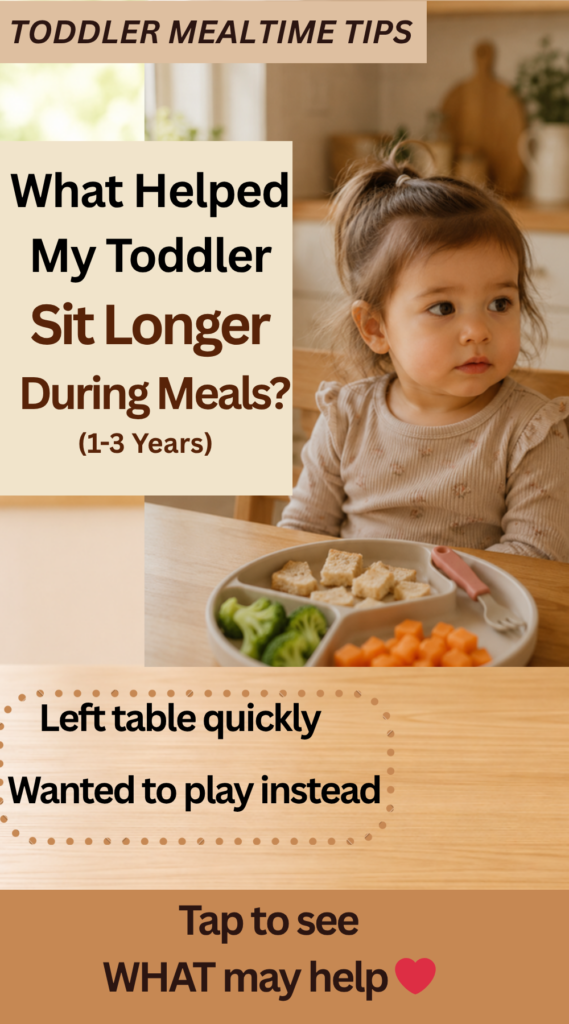
Many toddlers sit for only a few bites before wanting to leave the table and start playing again. This can feel frustrating for parents, especially when toddlers seem hungry but quickly become distracted during meals 💛
In many cases, this is a common toddler phase related to short attention span, distractions, active play, changing appetite, or irregular mealtime routines.
👉 You can also check this 7-Day Weight Gain Meal Plan for simple toddler meal ideas.
Why Some Toddlers Struggle To Sit During Meals
Toddlers are naturally active and curious during this age, so sitting calmly for meals can sometimes feel difficult for them.
Some common reasons may include:
✔ distractions during meals
✔ wanting to play instead of eat
✔ large food portions
✔ irregular meal timings
✔ short toddler attention span
Some toddlers also prefer smaller frequent meals instead of sitting for longer mealtimes.
Small Things That May Help
✔ Keep Meals Short & Calm
Long meals may feel overwhelming for toddlers. Calm shorter mealtimes often work better.
✔ Serve Smaller Portions First
Small portions may help toddlers feel less pressured during meals.
✔ Reduce Distractions
Turning off screens and reducing toys nearby may help toddlers focus better on eating.
✔ Keep Mealtime Routine Predictable
Serving meals around similar times daily may slowly help toddlers adjust to sitting during meals.
👉 Some moms also prefer using non-slip divided toddler plates or straw sipper cups to make mealtimes feel easier and more comfortable for toddlers.
Simple Meal Ideas For Toddlers
✔ Soft dal rice with ghee
✔ Mini paneer sandwiches
✔ Thick curd with soft fruits
✔ Sweet potato bites
✔ Small paratha strips with curd
✔ Egg pieces or omelets strip
Final Thoughts 💛
Leaving the table quickly or getting distracted during meals can be a common toddler phase between 1–3 years. Small routine changes, calm mealtimes, and gentle consistency may slowly help toddlers feel more comfortable sitting during meals over time.
Patience and realistic expectations usually matter most 💛
Medical Disclaimer
This content is for informational purposes only and should not replace professional medical advice. Always consult your pediatrician for concerns related to your toddler’s nutrition, feeding habits, or growth
Affiliate Disclosure
This post may contain affiliate links. As an Amazon Associate, I may earn from qualifying purchases at no extra cost to you.