
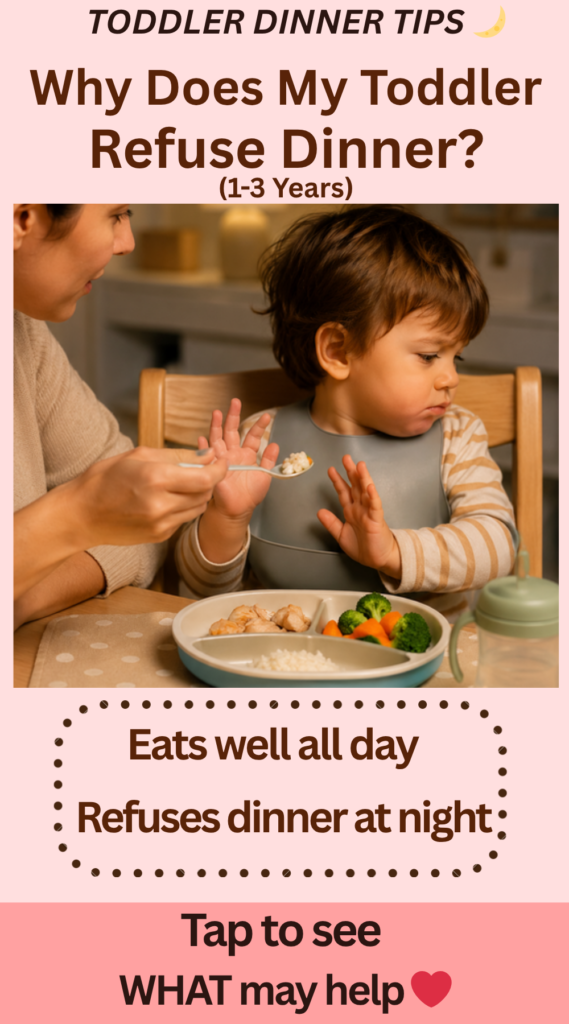
Some toddlers eat well during the day but suddenly refuse dinner at night. This can feel confusing for parents, especially when your toddler seems hungry earlier and then says “no” to evening meals 💛
In many cases, this is a common toddler phase related to tiredness, snacks before dinner, changing appetite, or evening routines.
👉 You can also check this 7-Day Weight Gain Meal Plan for simple toddler meal ideas.
🌙 Why Some Toddlers Refuse Dinner
After a full day of activity, many toddlers become more tired and distracted during evening meals.
Some common reasons may include:
- snacks too close to dinner
- milk before meals
- tiredness before bedtime
- wanting to play instead of eat
- changing appetite during toddler years
Some toddlers also naturally eat lighter dinners compared to breakfast or lunch.
🍽️ Small Things That May Help
✔ Keep Dinner Timing Predictable
Serving dinner around the same time daily may help toddlers feel more comfortable with evening meals.
✔ Keep Portions Small
Large dinner portions may feel overwhelming. Small portions often work better.
✔ Reduce Mealtime Pressure
Toddlers sometimes resist more when they feel pressured to eat extra bites.
✔ Include Familiar Foods
Adding one familiar food alongside dinner may help toddlers sit longer during meals.
👉 Some moms also prefer using divided toddler dinner plates or soft silicone spoons to make evening meals feel easier and less distracting for toddlers.
Simple Dinner Ideas for Toddlers
✔ Dal rice with ghee
✔ Soft paneer paratha
✔ Vegetable khichdi
✔ Curd rice
✔ Suji upma
🛒 Recommended Products
❤️ Final Thoughts
Refusing dinner can be a common toddler phase between 1–3 years. Small changes in evening routines, calm mealtimes, and balanced meals may gradually help toddlers feel more comfortable during dinner.
Consistency and patience usually matter most 💛
👉 Explore more toddler meal ideas: Tiny Tummy Meals
Affiliate Disclosure
This post may contain affiliate links. As an Amazon Associate, we may earn from qualifying purchases at no extra cost to you.
Medical Disclaimer
This content is for informational purposes only and should not replace professional medical advice. Please consult your pediatrician for personalized guidance regarding your toddler’s nutrition and growth.