
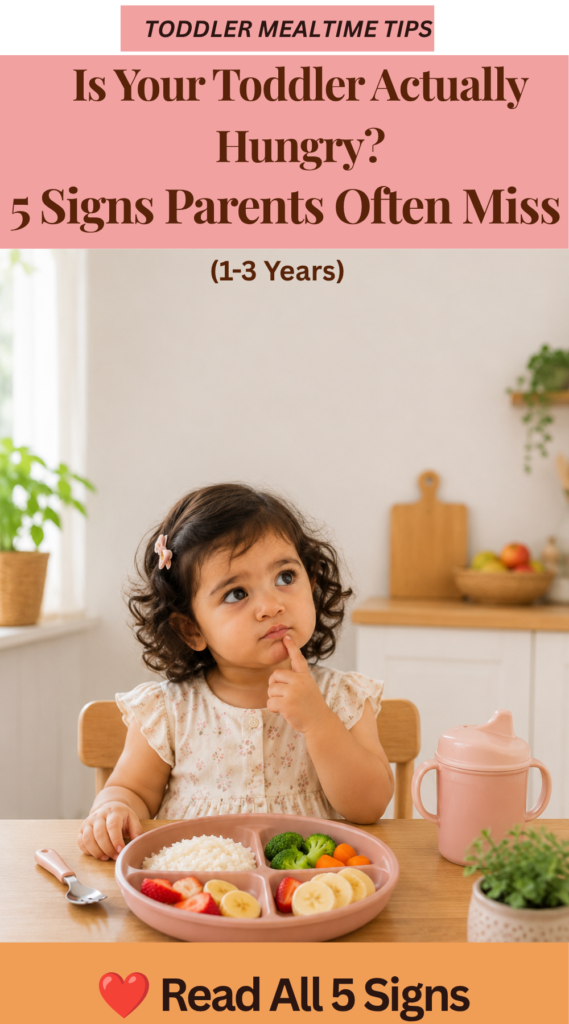
As parents, it’s easy to assume that every time our toddler asks for food—or refuses it—it must be because they’re hungry or not hungry. But toddlers don’t always eat based on hunger alone.
Sometimes they eat because they’re bored, tired, distracted, or simply curious. Other times they may truly be hungry but show it in ways we don’t immediately recognize.
Just like I shared in my The Tiny Mealtime Change That Helped My Toddler Eat More Calmly, What I Stopped Doing Right Before Mealtime, and Why My Toddler Eats Better When I Stop Talking During Meals posts, understanding why toddlers eat can make mealtimes much less stressful.
Here are five signs that helped me better understand when my toddler was actually hungry.
1. They Ask for Food Without Being Distracted
True hunger usually looks different from wanting a snack just because food is visible.
When my toddler is genuinely hungry, she:
- Comes to the table willingly
- Talks about food
- Starts eating without much encouragement
2. They Stay Interested After the First Few Bites
Sometimes toddlers ask for food but lose interest immediately.
When my toddler is actually hungry, she usually continues eating instead of walking away after one or two bites.
3. They’re Happy With Simple Foods
Real hunger doesn’t always require a favorite snack.
If my toddler happily eats rice, dal, fruit, or vegetables instead of demanding only treats, it’s usually a good sign she’s genuinely hungry.
4. They Eat at Their Normal Meal Time
I’ve noticed my toddler naturally becomes hungry around similar times each day.
Keeping meals and snacks on a predictable schedule helps me recognize true hunger cues much more easily.
5. Their Mood Improves After Eating
One of the biggest signs for us is what happens after the meal.
When my toddler is truly hungry, eating usually helps her become:
- Calmer
- Happier
- More energetic
- More interested in playing again
What Helped Me Most
Instead of asking,
“Do you want something to eat?”
I started watching my toddler’s behavior.
Learning the difference between hunger, boredom, tiredness, and habit helped reduce food battles and made mealtimes much more relaxed.
Recommended Products
💛 Divided Toddler Plate
💛 Toddler Spoon & Fork Set
💛 Spill-Proof Straw Cup
💛 Insulated Food Jar
💛 Snack Container Set
Explore More Toddler Feeding Posts
- The Tiny Mealtime Change That Helped My Toddler Eat More Calmly
- What I Stopped Doing Right Before Mealtime
- Why My Toddler Eats Better When I Stop Talking During Meals
- The One Thing I Never Forced My Toddler to Eat
- What Finally Helped My Toddler Sit Longer at Meals
Medical Disclaimer
This article is for informational purposes only and should not replace professional medical advice. Always consult your pediatrician regarding your child’s diet, allergies, growth, or nutritional needs.
Affiliate Disclosure
This article may contain affiliate links. As an Amazon Associate, I may earn from qualifying purchases at no extra cost to you.
Final Thoughts
Toddlers don’t always eat because they’re hungry, and they don’t always refuse food because they aren’t. Paying attention to their natural hunger cues instead of guessing helped me create calmer, happier mealtimes. Small observations can make a surprisingly big difference over time.